Summer of 2022…
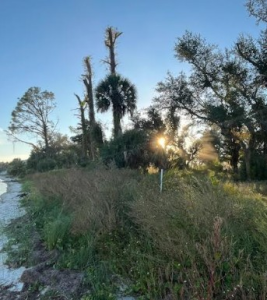
After thirty years of raising our three children and building successful careers in an Atlantan suburb, my husband and I were ready to choose where we wanted to spend the next chapter of our lives. And for us, that forever home was located in this little bayfront town in the Florida Panhandle: Parker. We had bought a home where we could retire right on the water, watch the tides roll in, and believed, that we’d found our own quiet corner of paradise.
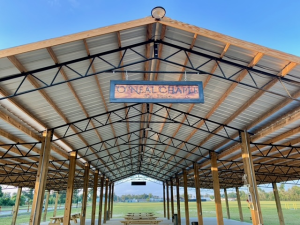
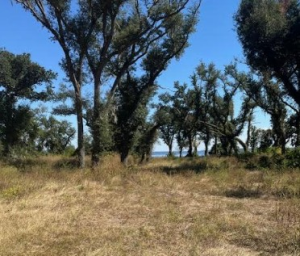
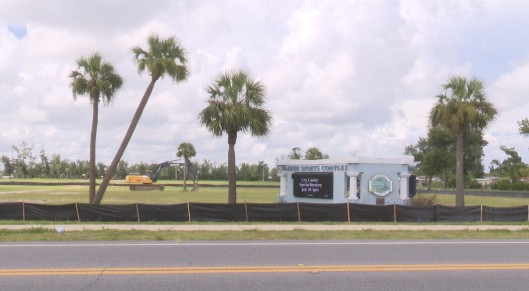
So I began making Parker, Florida my new home. Parker is a small bayfront town with its own kind of coastal grit, mobile homes rusting in the salt air, feral cats dashing across streets, and cars parked on lawns like yard decorations. And in 2022, the town was still dealing with the long tail of Hurricane Michael: its 18‑acre sports complex had been ravaged, and it was languishing not from neglect, but because FEMA approvals, RFPs, and a new park design took years to wind their way through the system.
My husband and I had recently bought a home right on the bay, a place where we dreamed of building a dock so we could slip a boat into the water from our own backyard. We had fallen in love at first sight–the kind that gets you into trouble–with this tiny waterfront town, 4,500 people tucked into 1.9 square miles, so much so that we went and bought two more commercial properties, dreaming of opening something fun, maybe a beer garden where folks could sit under the shade and watch the bay glitter in the afternoon light.
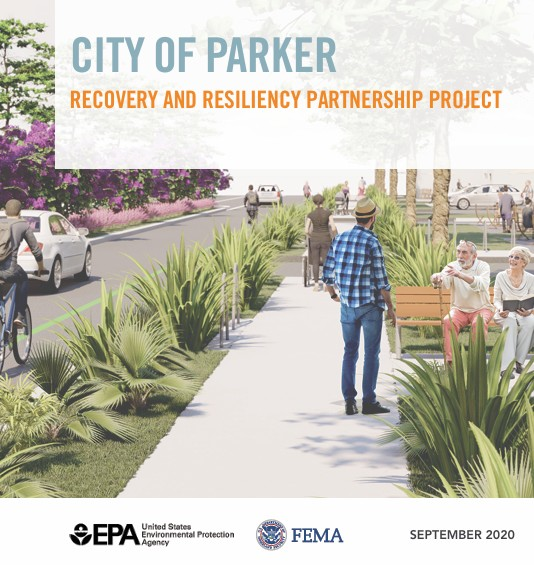
I set about getting familiar with the lay of the land — how decisions were made, who made them, and how the city officials were gonna take the path to this redevelopment. The city’s website had a polished brochure showing a beautiful vision for Parker’s future, and I wanted to understand whether this plan was a promise to be kept or just a pretty picture.
So off I went to the city council meetings and town halls, doing what I’d always done when I cared about a place. I didn’t raise my hand to ask questions for the sake of being a pain or drawing attention to myself or because I like to hear myself speak. I raised my hand, spoke up because that’s the way I was raised. In my world, being a good citizen meant paying attention to what was going on, showing up at meetings, offering your two cents, lending a helping hand, and trying — in whatever small way you could — to leave a place better than you found it. And not to make a fuss about it, but I’d been named Citizen of the Year twice — once by the Cobb County Chamber of Commerce and later by the local police department — so that sense of service was the engine that kept me moving forward.
Yeah, I was that kind of gal.
But Parker wasn’t Marietta.
I soon noticed at the city meetings there wasn’t time set aside for public comment. And in hindsight, I don’t think the council quite knew what to do with me –let alone a woman and a newcomer. Folks born and raised in Parker seemed to have special privileges I wasn’t yet aware of, an unspoken hierarchy that let them glide through the process while the rest of us were expected to sit quietly on the sidelines, because the Parker old‑timers had long since learned there was no need to speak up at the meetings. They knew real decisions weren’t made at the official gatherings at all — their deals were struck out of sight, at the Masonic Lodge or during those little “meet‑and‑greets” and phone calls that settled things long before any meeting was called to order.
After one meeting, a retired veteran leaned over to me and whispered, almost conspiratorially, “We never knew we were allowed to speak up at a city council meeting.”
That was the moment I realized I wasn’t in Georgia anymore — or anywhere that felt like the United States of America I thought I knew. But I stayed optimistic. Because optimism is what you cling to when you believe a place can be better — and you’re willing to stand up and say so.
Parker’s Sports Park Problems
When Parker announced a special, mid‑day City Council meeting to discuss the sports park — a project funded through FEMA reimbursement after Hurricane Michael — I saw an opportunity. The storm had hit in 2018, but the FEMA process, engineering work, and contracting had dragged on for years. By mid‑2022, it looked like the construction firm had finally been hired and the city was ready to move forward.
This was the moment — before ground was broken — when I believed thoughtful re-design of the proposed renderings (as presented at previous meetings) could still shape the future of the park.
So I emailed the City Council with a few practical suggestions — just things I noticed in the proposed layout that didn’t seem to make sense. I pointed out the setback issue with the courts (too close to the street), the chain‑link fencing that made the area feel boxed in, the parking lot placed right in the middle of the green space, and a few small changes that could make the park safer and more inviting. It wasn’t criticism — it was simply a resident trying to be helpful. I thought this might be the public’s last chance to offer feedback, so I shared mine by email.
The Meeting Where Public Input Wasn’t Welcome
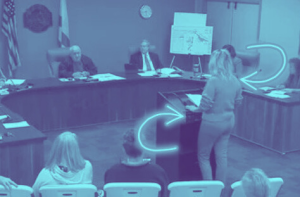
When I attended the next City Council meeting to ask questions about the revised site plan, I expected dialogue and collaboration. We were shown a single oversized drawing pinned to a foam board — an old‑fashioned color print of the engineer’s drawing, held up as if it were meant to pass for transparency. The design firm pointed to the board and presented the plan as final and the construction firm was breaking ground within days.
I was actually happy to see the sports park layout revised in line with some of my suggestions–thanks to one councilwoman who didn’t take offense and understood that the city needed to follow its own land development rules.
But any hope I had for a thoughtful discussion evaporated the moment I walked toward the podium. I saw the sneer slide across the face of one Parker‑born‑and‑bred councilwoman — the kind of look that says, plain as day, Who does she think she is? –and the big‑bellied mayor let out a harumph, the sort of noise a chauvinistic man makes when a woman dares to rise and speak.
Despite this, I raised my hand asking for permission to speak. I stood up and spoke up, posing questions I could ask only because of my public records request let me study the construction contract, compare the renderings, and literally walk the sports park to match every detail. The mayor finally cut me off and told me to sit down, no more questions or comments. Maybe it was because my questions were putting staff and officials on the spot. Nevertheless, I’d had my say. And that’s exactly what the Sunshine Law is meant to do: put citizens on an even playing field with their elected decision makers by providing the public with the same information the officials have–in the hopes that a public project (or policy) might turn out better because a resident cared enough to be informed, stand up at a meeting, speak up and ask questions.
The Public Had to Request What Should Have Been Handed Out
Before this meeting, I called City Hall to request a copy of the construction company’s contract and the revised site plan — the same plan we’d been expected to interpret from that single oversized, old‑fashioned color print pinned to the foam board.
I asked, “Do I need to make a public records request?” The answer: Yes ,you must fill out the “Public Records Request” form. The clerk told me she would email me the form to fill out.
That was not just inconvenient. It was illegal.
Florida law is clear:
- A public records request does not have to be in writing.
- A public records request may be made verbally.
- A public records request may be made by email.
- Agencies cannot require a special form.
- Agencies cannot impose barriers to access.
Yet Parker required me to:
- print out a form,
- fill it out by hand,
- physically drive it to City Hall or take a pic of the completed request form and email it back
- and drop it off–just to obtain a contract and site plan, that really should have been available on the city website.
That was the moment I realized Parker wasn’t knowingly ignoring best practices — they simply had no idea what the Sunshine Laws required.
The Sunshine Law Lesson
Florida’s Sunshine Manual says:
“A request to inspect or copy public records does not have to be in writing. A request may be made verbally.”
And F.S. 119.07(1)(a) says:
“Every person who has custody of a public record shall permit the record to be inspected and copied by any person desiring to do so…”
No forms. No hoops. No barriers.
But Parker put up barriers anyway.
A Civic Watchdog Is Born
I honestly didn’t know I would end up creating this website, Sunshine Law Citizen. I went into all of this believing I was dealing with government officials who knew — and respected — the laws that govern how a small town should be run and how citizens should be treated. What I found instead was a small town bureaucracy held together more by habit and favor than training, an office run by folks who’d simply inherited their roles and carried them out the way things had always been done.
It wasn’t malice– at least not yet. It was ignorance, the kind that grows when no one ever expects better.
And that was the moment I understood Parker wasn’t hampering public records requests by accident. It was hampering public records requests because no one inside city hall knew any different.